Introduction to the UK Television Revolution
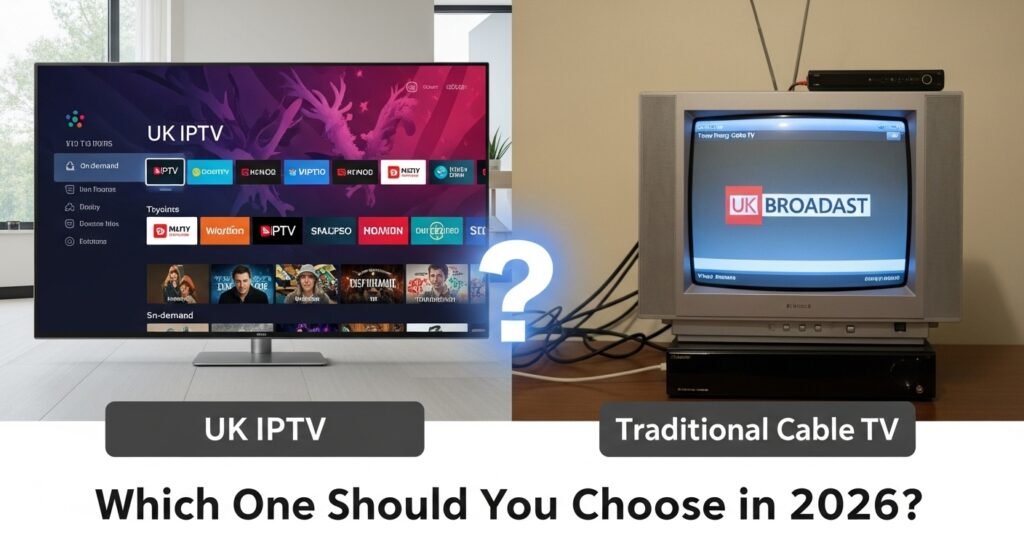
Television in the United Kingdom has never stood still, but the pace of change leading into 2026 has been nothing short of dramatic. What used to be a simple decision—pick a cable provider, install a box, and browse fixed channels—has evolved into a complex ecosystem of streaming technologies, on-demand platforms, and internet-powered television services. At the heart of this evolution lies a crucial question millions of viewers are now asking: UK IPTV vs traditional cable TV—which one is the better choice in 2026?UK IPTV vs Cable
This isn’t just a tech comparison. It’s a lifestyle decision. It affects how much you pay, what you watch, how you watch it, and even where you watch it. With IPTV UK, British IPTV, UKIPTV, and best IPTV services dominating conversations across forums, social media, and tech blogs, it’s clear that IPTV is no longer a niche option. Meanwhile, traditional cable TV continues to exist, supported by familiarity and reliability, but increasingly challenged by flexibility and cost.
In this in-depth guide, we’ll break everything down step by step. We’ll compare IPTV subscriptions, IPTV free trials, IPTV providers, and cable TV offerings across cost, performance, legality, content, and future potential. By the end, you won’t just understand the difference—you’ll know exactly which option fits your life in 2026.
Understanding IPTV: A Complete Breakdown
What Exactly Is IPTV?
IPTV stands for Internet Protocol Television. Instead of receiving television signals through satellite dishes or cable lines, IPTV delivers content using the internet. That might sound simple, but the implications are massive.
Think of IPTV as a digital pipeline. Content is sent directly to your device when you request it. No wasted bandwidth, fixed schedules, physical infrastructure inside your home beyond an internet connection.
This is why IPTV stream technology feels more personal and responsive than cable TV. You’re not just watching TV—you’re interacting with it.UK IPTV vs Cable
How IPTV Works Behind the Scenes
To understand why best IPTV UK services are thriving, it helps to understand how IPTV actually works:
-
Content is stored on remote servers.
-
When you select a channel or VOD title, the server sends that stream directly to your device.
-
Apps like IPTV Smarters, IPTV Smarters Pro, or IPTV Pro decode and display the stream.
-
You watch in real time, on demand, or using catch-up features.
Because everything runs over the internet, IPTV can be updated, scaled, and improved far faster than cable infrastructure.UK IPTV vs Cable
IPTV in the United Kingdom Explained
The IPTV United Kingdom market has grown rapidly due to high broadband penetration and increasing dissatisfaction with traditional cable pricing. UK viewers want more channels, more international content, more sports, and fewer restrictions. IPTV delivers exactly that.
From British IPTV focused on UK channels to United Kingdom IPTV services offering global lineups, the market has matured. In 2026, IPTV is no longer experimental—it’s mainstream.UK IPTV vs Cable
Traditional Cable TV in the UK: Still Relevant or Fading Fast?
How Cable TV Works
Traditional cable TV relies on physical infrastructure. Signals are broadcast through coaxial or fiber cables to households. Every subscriber receives the same bundle of channels, whether they watch them or not.
This system worked well for decades. It was reliable, predictable, and simple. But it was also rigid.
Cable TV in the UK in 2026
In 2026, cable TV still exists in the UK, but it’s under pressure. Rising operational costs, limited flexibility, and competition from best IPTV services have forced cable providers to rethink their strategies.
While cable TV still appeals to certain users—especially those who prefer simplicity—it struggles to compete on price, content variety, and device freedom.
IPTV UK vs Traditional Cable TV: A Head-to-Head Comparison
Technology and Infrastructure
Cable TV depends on physical cables and centralized broadcasting. IPTV depends on the internet and distributed streaming servers.
This difference matters because internet-based systems are easier to upgrade. IPTV providers can add channels, improve quality, and expand features without digging trenches or replacing hardware.
Content Availability
This is where IPTV truly shines.
With IPTV subscriptions, users often get:
-
Thousands of live channels
-
International content
-
Premium sports
-
Movies and TV shows on demand
-
Adult content (optional)
-
Pay-per-view events
Cable TV, on the other hand, limits users to predefined packages.
User Experience and Interface
Modern IPTV apps like IPTV Smarters Pro are designed for today’s users. They feature:
-
Clean interfaces
-
Electronic Program Guides (EPG)
-
Search functions
-
Favorites
-
Multi-screen support
Cable TV interfaces often feel outdated by comparison.
Cost Comparison: IPTV vs Cable TV in 2026
IPTV Subscription Pricing
A typical IPTV subscription in the UK can range from monthly to yearly plans, often costing significantly less than cable TV. Many providers also offer:
-
Multi-connection plans
-
Family packages
-
Discounts for long-term subscriptions
-
IPTV UK free trial options
Cable TV Pricing Models
Cable TV pricing often includes:
-
Installation fees
-
Equipment rental
-
Long-term contracts
-
Penalties for early cancellation
Over time, these costs add up.
Long-Term Value Analysis
When comparing annual costs, IPTV almost always wins. More content. Lower price. Greater flexibility.
Flexibility and Convenience
Device Compatibility
IPTV works on:
-
Smart TVs
-
Android TV boxes
-
Amazon Firestick
-
Smartphones
-
Tablets
-
PCs and laptops
Cable TV is usually limited to one location.
Mobility and Lifestyle Fit
With IPTV, your TV travels with you. Whether you’re at home, abroad, or on holiday, your IPTV UK service goes where you go.
IPTV Free Trial vs Cable Contracts
Trying IPTV is easy. Most IPTV providers offer free or low-cost trials. Cable TV rarely does.
Content Depth: Sports, Movies, and Global Channels
Live Sports Coverage
Sports fans are among the biggest adopters of IPTV. From Premier League and Champions League to boxing and UFC, Best IPTV service platforms offer unmatched access.
On-Demand Libraries
IPTV isn’t just about live TV. Massive VOD libraries mean you can binge-watch entire series whenever you want.
International and Niche Content
Want US channels? Asian dramas? European sports? United Kingdom IPTV platforms make global content accessible.
Streaming Quality and Performance
Internet Speed Requirements
In 2026, most UK households easily meet IPTV requirements:
-
SD: 5 Mbps
-
HD: 10–20 Mbps
-
4K: 25–40 Mbps
IPTV Stream Stability
Top-tier IPTV services use multiple servers, anti-freeze technology, and adaptive bitrate streaming to ensure smooth playback.
Cable TV Reliability
Cable TV remains reliable, especially during peak hours. However, IPTV has largely closed this gap.
Legal and Security Considerations
Is IPTV Legal in the UK?
IPTV Technology is legal. The legality depends on content licensing. Choosing reputable IPTV providers is essential.
How to Stay Safe with IPTV
-
Avoid suspiciously cheap services
-
Use VPNs where appropriate
-
Choose providers with customer support
-
Read reviews
Best IPTV Services in 2026
What Defines the Best IPTV UK Service
The Best IPTV UK Platforms share common traits:
-
Stable servers
-
High-quality streams
-
Broad channel lists
-
IPTV Smarters compatibility
-
Responsive support
Best IPTV 2026 Feature Checklist
-
HD & 4K
-
Catch-up TV
-
VOD
-
EPG
-
Multi-device access
Who Should Choose IPTV in 2026?
Cord-Cutters
If you hate contracts and overpriced bundles, IPTV is for you.
Sports Enthusiasts
Live sports access alone makes IPTV worth it.
Families
Multiple profiles and devices make IPTV family-friendly.
Who Might Prefer Cable TV?
Users with Poor Internet
If broadband is unstable, cable may still be safer.
Technologically Hesitant Users
Cable TV remains simpler for some.
Step-by-Step Guide: Switching from Cable to IPTV
Step 1: Check Internet Speed
Run a speed test and ensure stability.
Step 2: Choose an IPTV Provider
Look for trials, reviews, and support.
Step 3: Install Apps
Apps like IPTV Smarters Pro and IPTV Pro make setup easy.
Step 4: Configure and Stream
Enter credentials, load playlists, and enjoy.
Future of IPTV and Cable TV in the UK
Industry Trends Beyond 2026
AI recommendations, cloud DVRs, and personalized content will push IPTV further ahead.
Will Cable TV Survive?
Yes—but as a premium or niche option.
Final Verdict: IPTV or Cable TV in 2026?
For most people, IPTV UK is the clear winner. It’s cheaper, richer in content, more flexible, and future-ready. Cable TV still has a place, but IPTV is shaping how Britain watches TV.
Conclusion
The choice between UK IPTV and traditional cable TV in 2026 isn’t just about technology—it’s about control. IPTV gives viewers freedom: freedom to choose content, devices, schedules, and budgets. Cable TV offers familiarity, but at a cost.
As broadband improves and IPTV services mature, the gap will only widen. For most UK households, IPTV isn’t the future anymore—it’s the present.
FAQs
1. Is IPTV better than cable TV in the UK?
For most users, yes. IPTV offers more content and flexibility.
2. Is there a free IPTV trial available in the UK?
Yes, many providers offer IPTV UK free trial options.
3. What app is best for IPTV in 2026?
IPTV Smarters Pro is still a popular option.
4. Do I need fast internet for IPTV?
Yes, stable broadband is essential.
5. Are IPTV services legal?
IPTV is legal; content licensing matters.